Crafting Personalized Decor: A Guide to Dump Truck Construction Vehicle Name Signs
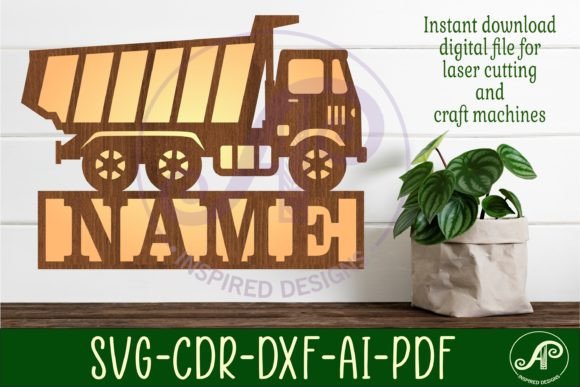
In the vibrant world of DIY home decor and personalized gifting, few items capture the imagination quite like themed name signs. Among the most popular choices for nurseries, playrooms, and children’s bedrooms is the Dump Truck Construction Vehicle Name Sign. This unique blend of industrial charm and personalization offers a creative way to celebrate a child’s identity while adding a playful aesthetic to their living space. However, creating these signs is no longer limited to professional carpenters with expensive workshops. Thanks to the rise of digital fabrication, hobbyists and small business owners can now produce high-quality, custom signs from the comfort of their homes.
This article explores the significance of these digital designs, the technology behind them, and how you can utilize files in formats like SVG, DXF, AI, CDR, and PDF to bring your creative visions to life. Whether you are a beginner with a laser cutter or an experienced CNC operator, understanding the workflow from digital download to physical product is essential for success.
The Appeal of Themed Name Signs in Modern Decor
Personalized decor has transcended simple monograms on towels. Today, it involves intricate designs that reflect personality, interests, and hobbies. For young children, especially those fascinated by heavy machinery, a construction vehicle name sign serves as more than just wall art. It acts as a focal point in room design, reinforcing their interests and making their space feel uniquely theirs.
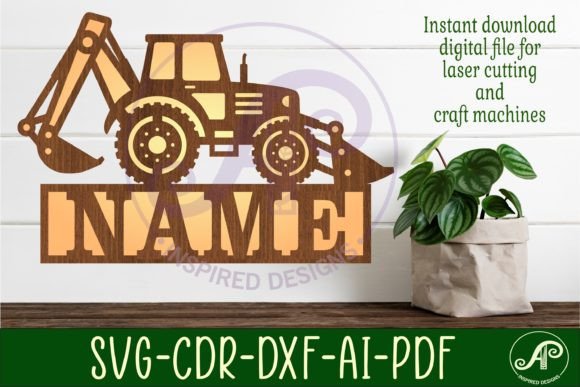
The dump truck motif is particularly enduring. Its bold lines, geometric shapes, and association with strength and building make it visually striking when cut from materials like wood or acrylic. When combined with a child’s name, the result is a bespoke piece of art that mass-produced retail items simply cannot match. This shift towards handmade, customized items reflects a broader trend in consumer behavior, where uniqueness and sentimental value are prized over convenience.
Understanding Digital Downloads and File Formats
At the heart of this modern crafting revolution is the digital download. When you purchase a design like the Dump Truck Construction Vehicle Name Sign, you are not buying a physical object. Instead, you are acquiring a zip folder containing various file formats tailored for different machines and software. Understanding these formats is crucial for a smooth crafting experience.
- SVG (Scalable Vector Graphics): This is the most common format for laser cutters and vinyl cutters. It retains quality at any size and is widely supported by software like LightBurn, Silhouette Studio, and Cricut Design Space.
- DXF (Drawing Exchange Format): Ideal for CAD programs and CNC routers, DXF files ensure precise dimensional accuracy, which is vital for larger projects or industrial-grade machines.
- AI (Adobe Illustrator) and CDR (CorelDRAW): These are native file formats for professional graphic design software. They allow advanced users to edit individual nodes, adjust curves, and modify the design before cutting.
- PDF (Portable Document Format): While not typically used for direct machine cutting, PDFs are excellent for viewing the design, printing templates for manual tracing, or sharing previews with clients.
By providing multiple formats, designers ensure that their work is accessible to a wide audience, regardless of the specific hardware or software ecosystem they use. This inclusivity fosters a vibrant community of makers who can share tips, troubleshoot issues, and inspire one another.
From Screen to Material: The Cutting Process
Once you have downloaded your zip folder and extracted the files, the next step is preparing your material. The designer of this specific dump truck sign has optimized the files for cutting at 25cm (10 inches) wide on 6mm MDF (Medium-Density Fiberboard) or particle board. However, the versatility of vector files means you are not locked into these specifications.
Material Selection: While 6mm MDF is a cost-effective and easy-to-cut option, you can experiment with other materials. Plywood offers a nicer grain for staining, acrylic provides a modern, glossy look, and even cardboard can be used for lightweight, temporary decorations. The key is to adjust your machine’s power and speed settings according to the material’s density and thickness.
Software Setup: The designer notes that the files were created in CorelDRAW and tested with LightBurn. If you use different software, such as Adobe Illustrator or Inkscape, you may need to import the SVG or DXF file and check for any node errors. Most modern cutting software allows you to visualize the cut path before sending it to the machine. Look for the exterior cut lines, which are often colored blue in the provided files to distinguish them from internal details or engraving lines.
Step-by-Step Guide to Linking Names
One of the most exciting aspects of these digital downloads is the ability to customize the name. While some listings provide pre-made names, others offer a base design where you must integrate the text. Here is a general guide to linking a name to the dump truck design:
- Choose Your Font: Select a font that complements the rugged, industrial look of the dump truck. Bold, sans-serif fonts often work best, ensuring readability and structural integrity when cut.
- Type the Name: Using your design software, type the desired name. Ensure the size of the text matches the scale of the truck. A good rule of thumb is to keep the height of the letters proportional to the wheels or the cab of the truck.
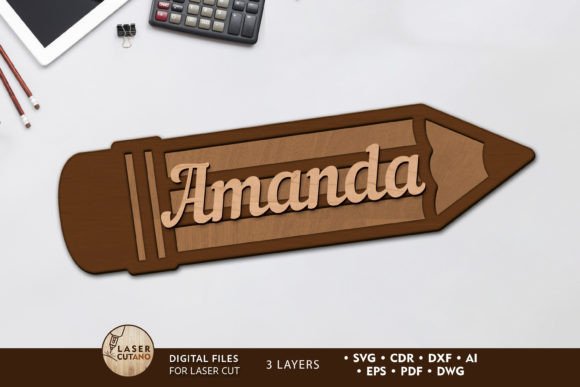
- Create Bridges: This is a critical step for laser cutting. Each letter must be connected to the main frame or to adjacent letters via small "bridges" or tabs. Without these connections, individual letters will fall out of the material, resulting in a pile of loose pieces rather than a cohesive sign. Typically, bridges of 2-3mm are sufficient for 6mm MDF.
- Weld or Unite Paths: Once the name is positioned and bridged, use the "Weld," "Union," or "Combine" function in your software to merge the text with the truck design into a single continuous path. This ensures the laser cutter treats the entire sign as one object.
- Test Cut: Before cutting your final piece, perform a test cut on a scrap piece of the same material. This helps verify that the bridges are strong enough and that the cut quality meets your standards.
Practical Relevance and Business Opportunities
Beyond personal use, these digital files hold significant potential for small businesses. Etsy sellers, craft fair vendors, and local gift shops can leverage these designs to create inventory with minimal upfront cost. Since there is no physical shipping involved in the initial purchase, overheads are low. The primary investment is time and material.
Moreover, the ability to customize sizes allows for diverse product offerings. A 10-inch sign might be perfect for a shelf display, while a scaled-up version could serve as a door hanger or a prominent wall feature. This flexibility enables creators to cater to different customer needs and price points.
It is important to note, however, that working with digital files requires a learning curve. If the provided formats do not work with your specific setup, communication with the designer is key. Many designers, like the one behind this dump truck sign, are willing to assist or provide alternative formats if requested. This collaborative spirit is a hallmark of the maker community, where knowledge sharing drives innovation.
Common Misunderstandings About Digital Crafting
A frequent misconception among beginners is that buying a digital file guarantees a perfect final product. In reality, the quality of the output depends heavily on the user’s machine calibration, material choice, and software proficiency. Another assumption is that all vector files are universally compatible. While SVG is widely accepted, nuances in how different programs interpret nodes can lead to unexpected results. Therefore, always inspect your files before cutting.
Additionally, some users overlook the importance of post-processing. Laser-cut MDF often has charred edges that may require sanding or painting. Acrylic may need protective film removal. Accounting for these finishing steps is essential for achieving a professional-looking result.
Conclusion
The Dump Truck Construction Vehicle Name Sign represents the intersection of creativity, technology, and personalization. By utilizing digital downloads in formats like SVG, DXF, AI, CDR, and PDF, makers can produce high-quality, custom decor that resonates with children and parents alike. Whether you are crafting for your own home or building a small business, understanding the tools and techniques involved empowers you to create meaningful, lasting pieces.
As technology continues to democratize manufacturing, the barrier to entry for creating professional-grade crafts lowers. With the right files, a bit of patience, and a willingness to learn, anyone can transform a simple digital design into a cherished physical object. So, download your files, fire up your laser cutter or CNC router, and start building something unique today.