City Map Lelystad Plattegrond for Laser: A Practical Guide to Custom Laser-Cut Wall Art and Magnets
When selecting personalized home decor or unique gifts, the intersection of digital design and physical craftsmanship offers compelling possibilities. The City Map Lelystad Plattegrond for Laser represents a specific niche within this market: a vector-based, multi-layered design file optimized for laser cutting and engraving machines. Unlike standard printed posters or mass-produced wall art, this format empowers makers, hobbyists, and small business owners to create tangible, textured representations of the Dutch city of Lelystad.
Understanding the technical specifications and practical applications of this resource is essential before committing to a project. This article explores the structure, versatility, and decision-making factors associated with using a laser-ready map of Lelystad, helping you determine if it aligns with your creative goals or if an alternative approach might serve you better.
Understanding the Two-Layer Design Structure
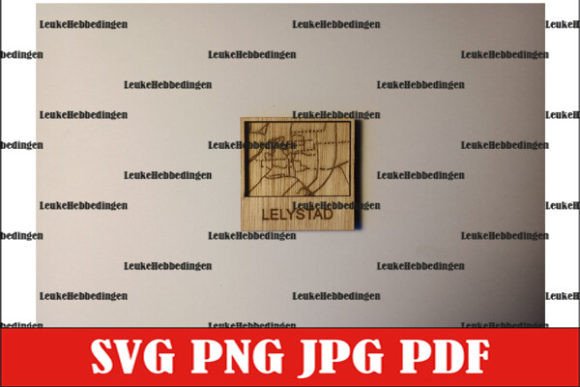
The core value of a Plattegrond van Lelystad, geschikt voor laser lies in its architectural simplicity and functional layering. Most high-quality laser map files are not single-image bitmaps but rather structured vector files divided into distinct components. For the Lelystad map, the standard configuration includes two primary layers:
- Layer 1 (Frame and Place Name): This top layer typically consists of a clean border or frame that encloses the design, along with the text "Lelystad." This layer is designed to be cut out completely, creating a physical boundary for the piece. The text is often designed with bridges or connectors to ensure it remains attached to the frame during the cutting process, preventing loose letters from falling out.
- Layer 2 (Background Map): This bottom layer contains the detailed street network, waterways, and geographical outlines of the city. Instead of being cut all the way through, this layer is intended for engraving or shallow cutting. This creates a visual contrast where the streets appear recessed or darkened against the natural wood grain or acrylic background.
This separation allows for significant creative flexibility. By keeping the map details on a separate background layer, creators can choose different materials for the base and the frame. For instance, one might use a dark walnut for the frame and a light birch plywood for the map background, enhancing the visibility of the engraved streets.
Scalability: From Wall Decor to Miniature Magnets
One of the most distinct advantages of using a vector-based City Map Lelystad Plattegrond for Laser is its infinite scalability without loss of quality. The default specification often cited is 30x30cm, a size that strikes a balance between detail and presence, making it ideal for standard wall decoration in living rooms, offices, or hallways. At this dimension, the intricacies of Lelystad’s urban planning—known for its distinctive circular and linear structures—are clearly visible.
However, the utility of the file extends far beyond large-scale decor. Because the design is vector-based (available in formats like SVG and DXF), it can be scaled down proportionally. A popular alternative application is reducing the design to 5x5cm. At this miniature scale, the item transitions from wall art to functional accessory, such as a refrigerator magnet or a keychain charm.
When scaling down, there are tradeoffs to consider. While a 30x30cm piece can accommodate fine street details, a 5x5cm magnet requires simplification. If the original file is highly detailed, the laser may struggle to engrave tiny streets at such a small size, potentially resulting in a blurred or burnt appearance. Therefore, users intending to create magnets should verify if the provider offers a simplified version of the map or adjust the line weights in their design software before cutting.
File Formats and Compatibility
To ensure smooth workflow integration, the availability of multiple file formats is crucial. A comprehensive Map of Lelystad, suitable for laser package typically includes:
- SVG (Scalable Vector Graphics): Ideal for users working with web-based design tools or hobbyist laser software like LightBurn or xTool Creative Space. It preserves editability and scales perfectly.
- DXF (Drawing Exchange Format): The industry standard for CAD software and many professional laser cutters. It ensures precise geometric data transfer.
- PDF, JPG, and PNG: These raster or document formats are useful for previewing the design, printing paper prototypes, or using as reference images. However, they are generally not suitable for direct laser cutting unless converted back to vectors, which can introduce errors.
Choosing the right format depends on your equipment. If you are using a diode laser cutter at home, SVG is often the most user-friendly. For industrial CO2 lasers, DXF may provide more consistent results regarding path ordering and cut quality.
Comparing Laser-Cut Maps to Alternative Decor Options
When evaluating home decor or gift options, it is helpful to compare laser-cut maps against other common alternatives. Each method has distinct strengths and limitations.
Laser-Cut Wood vs. Printed Posters
Printed posters are cost-effective and easy to produce but lack tactile depth. A City Map Lelystad Plattegrond for Laser offers a three-dimensional quality. The interplay of light and shadow on the engraved streets creates a dynamic visual that changes depending on the viewing angle and ambient lighting. However, laser cutting requires access to specific machinery and materials, making it more time-intensive and potentially more expensive per unit than simple printing.
Laser-Cut Wood vs. 3D Printing
3D printed maps can offer even greater depth and topographical accuracy, especially if elevation data is included. However, 3D printing is significantly slower and often results in a plastic aesthetic that may not suit rustic or modern minimalist interiors. Laser-cut wood provides a warm, natural finish that appeals to a broader audience and can be completed in minutes rather than hours.
Custom Laser Files vs. Pre-Made Products
Purchasing a finished wooden map from a retailer eliminates the effort of production but limits customization. With a digital file, you control the material, stain, finish, and size. You can experiment with painted backgrounds, LED backlighting, or mixed media. The tradeoff is the learning curve associated with operating laser equipment and finishing wood properly.
Decision Factors: Is This Right for You?
Deciding whether to utilize a Plattegrond van Lelystad, geschikt voor laser depends on several practical considerations. This option is likely the best fit if:
- You have access to a laser cutter: Whether you own a machine or have access to a local makerspace, the ability to cut and engrave is a prerequisite.
- You value customization: You want to choose specific wood types, stains, or sizes that are not available in off-the-shelf products.
- You are creating a personalized gift: For residents of Lelystad or those with a connection to the city, a locally sourced, handcrafted map carries emotional weight that generic decor lacks.
- You enjoy the making process: The satisfaction of sanding, staining, and assembling the layers is part of the value proposition.
Conversely, you might consider alternative options if:
- You need a quick solution: If you need a gift immediately, the time required for sourcing materials, cutting, and finishing may be prohibitive.
- You lack technical confidence: While vector files are user-friendly, troubleshooting laser settings (power, speed, frequency) can be challenging for beginners.
- You prefer high-gloss or metallic aesthetics: Wood has a natural, organic look. If your interior design scheme relies heavily on chrome, glass, or high-gloss plastics, a laser-cut wooden map might clash unless heavily modified.
Practical Tips for Best Results
To maximize the quality of your City Map Lelystad Plattegrond for Laser project, consider these professional tips:
Material Selection: Birch plywood is a popular choice for its light color and uniform layers, which make the engraved streets stand out. Walnut or oak offers a richer, darker tone but may require higher laser power. Avoid woods with high resin content, such as pine, as they can produce uneven engraving and excessive smoke.
Test Cuts: Always perform test cuts on scrap pieces of the same material. Adjust the engraving depth to ensure the streets are visible but not so deep that they weaken the structural integrity of the background layer.
Finishing Touches: Sanding the edges after cutting removes char marks and improves the tactile feel. Applying a clear matte varnish can protect the wood and enhance the contrast of the engraved areas without adding unwanted shine.
In conclusion, the City Map Lelystad Plattegrond for Laser is a versatile resource that bridges digital precision with artisanal craftsmanship. Whether you are creating a statement 30x30cm wall piece or a subtle 5x5cm magnet, the two-layer design provides a solid foundation for creative expression. By understanding the technical requirements and comparing them against your specific needs, you can decide if this hands-on approach is the right path for your next project.