Bringing Rhythm to Your Walls: A Guide to Music Wall Clock Laser Cut Files, SVG
There is something uniquely satisfying about watching a digital design transform into a tangible object. For makers, crafters, and small business owners, the gap between an idea on a screen and a finished product in hand is where the magic happens. This is precisely where Music Wall Clock Laser Cut Files, SVG come into play. These aren’t just generic timepieces; they are thematic designs that blend functionality with artistic expression, specifically tailored for those who love music or want to add a rhythmic aesthetic to their space.
If you have access to a laser cutter, CNC router, or even a compatible craft machine, these digital templates offer a streamlined path to creating professional-grade decor. The appeal lies in the versatility of the format. Whether you are a hobbyist looking to personalize your home studio or an entrepreneur seeking a unique product line, understanding how to leverage these files can save you hours of design time while ensuring precision in every cut.
Why Choose a Music-Themed Design?
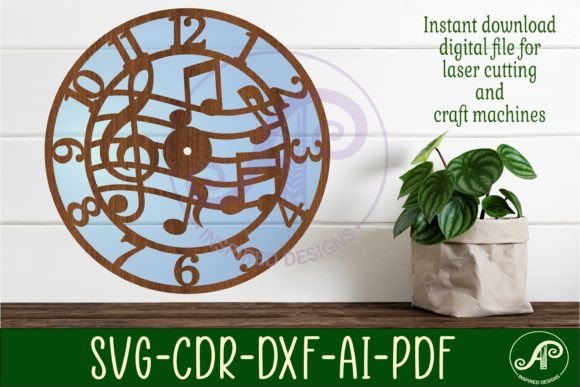
Clocks are often overlooked as purely functional items, but they serve as focal points in interior design. A music-themed clock does more than tell time; it signals personality. For musicians, audio engineers, or avid concert-goers, standard wall clocks feel sterile. A design featuring musical notes, instruments, or sound wave patterns creates an immediate emotional connection to the room.
When you download a set of Music Wall Clock Laser Cut Files, SVG, you are acquiring a ready-made solution that has already been optimized for cutting. This eliminates the steep learning curve associated with vector design software. Instead of spending days figuring out node placement or kerf compensation in CorelDRAW or Adobe Illustrator, you can focus on material selection and finishing. The designs are typically tested for structural integrity, ensuring that delicate elements like thin note stems or intricate treble clefs remain intact during the cutting process.
Real-World Applications for Creators and Businesses
The utility of these digital downloads extends far beyond a single personal project. Different users find value in these files for varied reasons, depending on their goals and resources.
Home Decor and Personalization
For the DIY enthusiast, these files offer a way to create custom gifts that feel high-end without the retail price tag. Imagine crafting a birthday present for a piano teacher or a housewarming gift for a friend who plays guitar. By selecting materials like walnut veneer, acrylic, or bamboo, you can match the clock to the recipient’s existing decor. The recommended size range of 25 to 50 centimeters allows for flexibility. A smaller 29cm (11.4 inches) version fits perfectly in a cozy bedroom or office nook, while a larger cut makes a bold statement in a living room or rehearsal space.
Etsy Shops and Small Business Inventory
For entrepreneurs selling on platforms like Etsy or at local craft fairs, speed and consistency are crucial. Using pre-tested SVG and DXF files means you can produce inventory rapidly. Since the center hole is standardized at 8mm, sourcing clock mechanisms becomes straightforward. You can buy bulk movements that fit this specification, ensuring that every clock you sell functions reliably. The ability to offer different material options—such as mirrored acrylic for a modern look or stained wood for a rustic vibe—allows you to cater to diverse customer preferences without redesigning the core product.
Educational and Community Projects
Music teachers and community centers can use these designs for educational displays or fundraising projects. A school music department might commission a large wooden clock for their practice hall, involving students in the sanding and painting process. This not only beautifies the space but also fosters a sense of ownership and pride among students. The simplicity of importing files into software like LightBurn makes it accessible for educators who may have basic technical skills but lack advanced design expertise.
Technical Considerations Before You Cut
While the convenience of a digital download is undeniable, successful execution requires attention to detail. Before you send your file to the laser, consider the following practical aspects to ensure a clean result.
- Material Thickness: Ensure your material thickness matches the settings used when the file was designed. Most laser-cut clock faces are designed for 3mm to 6mm materials. If you use thicker stock, you may need to adjust the depth of any engraved details or ensure the clock hands have enough clearance.
- File Compatibility: The package includes multiple formats to suit different workflows. If you use CorelDRAW, the CDR file is ideal. For LightBurn users, the SVG or DXF formats are generally preferred. Always open the file in your specific software first to check for any unintended node shifts or scaling issues.
- Kerf Compensation: Remember that the laser beam removes a small amount of material during cutting. If precision is critical for fitting parts together, test cut a small section first to determine your machine’s kerf width and adjust accordingly.
- Center Hole Accuracy: The 8mm center hole is standard for most clock mechanisms, but always verify the shaft diameter of the specific movement you purchased. A slight mismatch can cause the hands to wobble or stick.
Navigating the Digital Download Process
It is important to remember that this is a digital download only. No physical item will be mailed to you. This distinction is vital for new buyers who might expect a finished product. Once the purchase is complete, you will receive a zip folder containing all the necessary files. Extracting these files is the first step. Organize them in a dedicated folder on your computer so you can easily access the SVG, DXF, AI, PDF, and CDR versions as needed.
The inclusion of both filled and outline SVG formats provides additional flexibility. Filled shapes are useful for certain engraving applications or when using software that interprets solid shapes differently than vectors. Outline formats are typically better for pure cutting paths. Having both ensures that regardless of your software’s quirks, you have a compatible version ready to go.
Maximizing Value Through Material Choice
The design is only half the equation; the material brings it to life. While plywood is a common choice for its affordability and ease of cutting, experimenting with other materials can elevate the final product. Acrylic offers a sleek, modern aesthetic, especially when backlit. Leather or felt can be layered behind a wooden face to dampen sound and add texture. For a high-end look, consider hardwoods like cherry or maple, which stain beautifully and highlight the grain against the laser-cut edges.
When working with these Music Wall Clock Laser Cut Files, SVG, think about the end environment. A clock destined for a humid bathroom needs moisture-resistant materials like acrylic or treated wood. A piece for a dry, air-conditioned office can safely use untreated plywood or MDF. Matching the material to the environment ensures longevity and maintains the visual appeal over time.
Final Thoughts on Creative Efficiency
In a world where time is a precious commodity, tools that streamline creativity are invaluable. These laser cut files represent more than just a pattern; they are a shortcut to professional results. By leveraging pre-designed, tested templates, you bypass the trial-and-error phase of design and move straight to production. Whether you are making one clock for your own enjoyment or fifty for your online store, the quality and compatibility of these files support your goals. Embrace the blend of technology and craftsmanship, and let your next project resonate with precision and style.