Happy July 4th Welcome Sign - Break Jhon: A Practical Guide for Creators
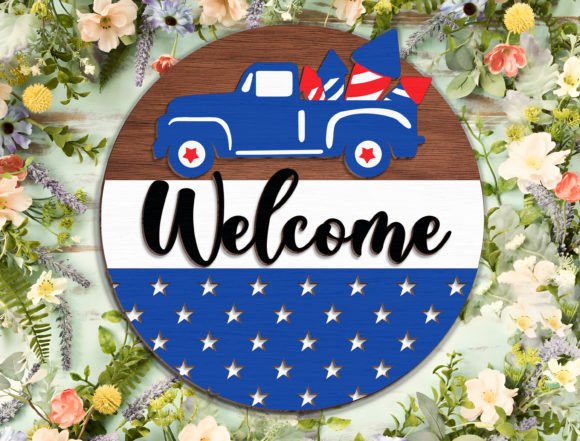
The Fourth of July is more than just a date on the calendar; it is a peak season for home decor, community events, and small business sales. For makers, crafters, and entrepreneurs, this holiday represents a significant opportunity to showcase creativity or generate revenue. One popular design that has captured attention is the Happy July 4th Welcome Sign - Break Jhon. While the name might seem unusual at first glance, the product itself is a versatile digital asset designed for laser cutting and vinyl crafting. However, diving into digital downloads without understanding the technical specifics can lead to wasted time and material. This guide aims to clarify what this product offers, highlight common pitfalls, and provide actionable advice to ensure your project succeeds.
Understanding the Digital Asset
Before you download or purchase, it is crucial to understand exactly what you are getting. The Happy July 4th Welcome Sign - Break Jhon is not a physical item shipped to your door. It is a DIGITAL DOWNLOAD. This distinction is vital for beginners who may expect a ready-to-hang decoration. Instead, you receive a ZIP file containing vector graphics tailored for precision cutting machines.
The design features a circular layout with a diameter of 30 cm (approximately 11.8 inches). This size is ideal for standard door hangers, wall decor, or table centerpieces. The ZIP file typically includes multiple formats such as SVG, DXF, AI, EPS, PDF, and DWG. These files are not colored images; they consist of clean lines intended for machine interpretation. Specifically, the design uses a color-coded system for laser users: Red lines indicate cut paths, while Blue lines indicate engrave paths. This separation allows for efficient processing in software like LightBurn, LaserGRBL, or proprietary systems used by Glowforge, xTool, and other laser cutters.
Common Mistakes and How to Avoid Them
Even experienced creators can stumble when working with new digital files. Here are the most frequent errors encountered with this type of product and how to correct them.
Ignoring File Compatibility
A major oversight is assuming all file formats work equally well with every machine. For instance, if you are using a Cricut or Silhouette, the SVG format is generally your best bet because it retains scalability and layer information. However, if you are using older CAD software or specific industrial cutters, you might need the DXF or DWG files.
The Fix: Always check your machine’s software requirements before starting. If you use Inkscape or Adobe Illustrator, the AI and EPS files provide editable vectors that allow you to tweak nodes and adjust spacing. Downloading the wrong format can result in imported images that are rasterized (pixelated) rather than vector-based, making them impossible to cut cleanly.
Misinterpreting the Color Codes
The product description notes that red is for cutting and blue is for engraving. A common mistake is ignoring these layers or merging them incorrectly in your design software. If you send a file to a laser cutter with all lines set to "cut," you may end up engraving text that was meant to be cut out, or vice versa. This ruins the material and wastes time.
The Fix: Open the file in your preferred software and verify the layer settings. Ensure that the red paths are assigned to your cutting tool and the blue paths to your engraving tool. If your software does not support color-based operations, you may need to manually assign operations to each layer. This step is critical for achieving the professional look intended by the designer.
Overlooking Material Constraints
The Happy July 4th Welcome Sign - Break Jhon is described as economical and easy to assemble, which makes it great for mass production. However, "easy to assemble" does not mean "indestructible." Beginners often choose materials that are too thin or brittle for a 30 cm diameter sign. A sign of this size needs structural integrity, especially if it is hung on a door where it might sway in the wind.
The Fix: Choose materials wisely. For laser cutting, 3mm plywood or acrylic is usually sturdy enough. If you are using cardstock or vinyl, consider backing it with a rigid board. Test cut a small section first to ensure your machine settings are optimized for the material thickness. This prevents jagged edges or incomplete cuts that compromise the final aesthetic.
Maximizing Efficiency for Mass Production
If you are a small business owner or educator planning to produce multiple units, efficiency is key. The design’s simplicity is its greatest strength. Because it relies on basic shapes and clear lines, it cuts quickly. However, poor nesting (arranging designs on the material sheet) can lead to excessive waste.
- Nest Efficiently: Arrange multiple copies of the sign on your material sheet to minimize scrap. Leave enough space between designs to account for the kerf (the width of the cut).
- Batch Processing: If your software allows, queue multiple jobs. Since the design is consistent, you can set your power and speed settings once and apply them to the entire batch.
- Quality Control: Inspect the first few units closely. Check for burn marks on wood or melting on acrylic. Adjust your air assist or focus if necessary before committing to a large run.
What to Check Before You Start
To ensure a smooth experience with the Happy July 4th Welcome Sign - Break Jhon, take a moment to review these checkpoints:
- Software Readiness: Do you have a program that accepts SVG files? Whether it is Glowforge’s web interface, Cricut Design Space, or CorelDRAW, ensure it is updated and functioning.
- Material Availability: Do you have the right size sheet of material? A 30 cm diameter requires a sheet slightly larger than that to allow for margins and holding tabs.
- Assembly Plan: Although the project is easy to assemble, have you gathered any necessary adhesives, strings, or hanging hardware? Planning this ahead prevents mid-project delays.
Final Thoughts
The Happy July 4th Welcome Sign - Break Jhon is a practical, well-designed resource for anyone looking to celebrate Independence Day with a handmade touch. By understanding the file formats, respecting the color-coded instructions, and choosing appropriate materials, you can avoid common frustrations and produce high-quality results. Whether you are a hobbyist making one sign for your front door or an entrepreneur fulfilling orders for a local market, attention to detail is what separates a good project from a great one. Take the time to prepare, test, and execute with care, and you will find that this digital download is a valuable addition to your creative toolkit. Have a nice day, and happy crafting!