City Map Middelburg Plattegrond Laser: Integrating Precision Design into Your Creative Workflow
In the evolving landscape of digital fabrication and personalized decor, the intersection of geographic data and laser cutting technology offers unique opportunities for creators and businesses alike. The City Map Middelburg Plattegrond Laser represents more than just a decorative item; it is a versatile asset that fits seamlessly into various professional and personal workflows. Whether you are a small business owner looking to expand your product line, a hobbyist refining your vector design skills, or an educator teaching spatial awareness, understanding how to utilize this specific map format can significantly enhance your output quality and efficiency.
This guide explores the practical implementation of the Middelburg map design, focusing on its two-layer structure, material compatibility, and scalability. By treating this digital asset as a core component of your production process, you can streamline operations from file preparation to final finishing.
Understanding the Two-Layer Architecture
The foundation of any successful laser-cutting project lies in the integrity of the source file. The Plattegrond van Middelburg, geschikt voor laser is engineered with a specific two-layer architecture that simplifies the manufacturing process while maximizing aesthetic appeal. This structure consists of:
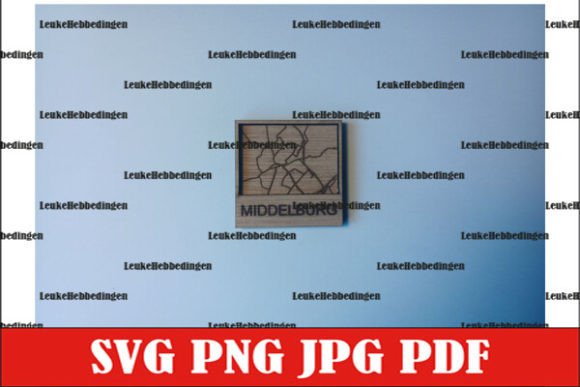
- Layer 1 (Frame and Place Name): This top layer provides structural integrity and branding. It includes the outer frame and the text "Middelburg," which serves as both a label and a design element.
- Layer 2 (Background Map): This bottom layer contains the intricate street layout and geographical details of the city.
From a workflow perspective, this separation is crucial. It allows for distinct processing instructions for each layer. For instance, you might choose to cut the frame completely through the material while only engraving the map details on the background layer. This dual-functionality—cutting and engraving—requires careful planning in your CAM (Computer-Aided Manufacturing) software. By keeping these elements on separate layers, you reduce the risk of errors during the nesting phase and ensure that the alignment between the frame and the map remains precise.
File Format Compatibility and Preparation
One of the most significant advantages of this digital asset is its availability in multiple formats, including PNG, PDF, JPG, SVG, and DXF. Each format serves a different stage in the production pipeline, and selecting the right one is essential for maintaining quality control.
For professional laser cutting, SVG and DXF are the preferred formats. These vector-based files ensure that lines remain crisp and scalable without pixelation. When importing these files into software like LightBurn, RDWorks, or Adobe Illustrator, you can easily assign specific power and speed settings to each layer. This is vital for achieving clean cuts on the frame and subtle, high-contrast engraving on the map details.
Conversely, raster formats like PNG and JPG are useful for previewing designs or creating marketing materials, but they are less ideal for direct machine input due to potential resolution issues at larger scales. PDFs offer a middle ground, often preserving vector data while being universally accessible for client approvals or print proofs. By standardizing your workflow to prioritize vector inputs, you minimize the time spent on image tracing and correction, thereby increasing overall productivity.
Scalability: From Wall Decor to Micro-Accessories
A key feature of the City Map Middelburg Plattegrond Laser is its adaptability across different scales. The standard specification is 30x30cm, a size optimized for wall decoration. At this dimension, the map serves as a striking piece of interior design, suitable for homes, offices, or hospitality venues. The 30x30cm format allows for sufficient detail in the street layout, making it recognizable to locals and visitors alike.
However, the workflow does not end at large-format decor. The same digital file can be scaled down significantly, for example, to 5x5cm. At this reduced size, the item transforms into a compact accessory, such as a refrigerator magnet or a keychain charm. This scalability opens up diverse revenue streams for entrepreneurs. You can produce a single master file and generate products for different market segments without redesigning the core asset.
When scaling down, it is important to adjust your laser parameters. Smaller details require finer focus and potentially lower power settings to prevent burning or merging of adjacent lines. Testing is essential here; a setting that works perfectly for a 30cm wall piece may obliterate the delicate streets of a 5cm magnet. Incorporating a test batch into your production schedule ensures consistency and reduces material waste.
Material Selection and Engraving Techniques
The versatility of the map extends to material choice. While wood is the most common medium for laser-cut maps, offering a warm, natural aesthetic, other materials like acrylic, leather, or slate can be used depending on the desired outcome. The two-layer design facilitates creative combinations. For instance, you might use a dark walnut for the frame and a lighter birch for the background map, creating a natural contrast that highlights the engraved streets.
Engraving the place name and the map requires attention to depth and contrast. On wood, a shallow engrave often suffices to create a visible mark, especially if the wood has a prominent grain. On acrylic, deeper engraving or frosted effects can be achieved by adjusting the frequency of the laser pulses. The ability to engrave both the place name and the plattegrond allows for customization. You could add dates, coordinates, or personal messages within the frame layer, enhancing the emotional value of the product for customers.
Integrating into Business and Creative Workflows
For small business owners and freelancers, integrating the City Map Middelburg Plattegrond Laser into your catalog involves more than just cutting wood. It requires a holistic approach to inventory, marketing, and customer service.
- Inventory Management: Since the file is digital, your primary inventory constraint is raw material. Stocking standard sheet sizes that minimize waste when cutting 30x30cm squares is a critical logistical step.
- Customization Options: Offer clients the ability to choose from other available cities. The workflow remains identical; only the vector file changes. This modularity allows you to scale your offerings without increasing operational complexity.
- Quality Control: Implement a checklist for each batch. Check for charring on edges, clarity of engraved text, and alignment between the two layers. Consistent quality builds trust and encourages repeat business.
Educators and hobbyists can also benefit from this structured approach. Using the map as a teaching tool for geometry, geography, or digital fabrication helps students understand the relationship between digital design and physical objects. The clear separation of layers makes it an excellent example for explaining vector graphics and machine coordination.
Long-Term Value and Maintenance
Once produced, these maps require minimal maintenance, contributing to their long-term value as decorative items. Dusting with a soft cloth is usually sufficient for wood, while acrylic can be cleaned with standard plastic cleaners. For businesses, highlighting this durability in marketing materials can justify premium pricing. Customers appreciate products that are not only aesthetically pleasing but also durable and easy to care for.
Furthermore, the timeless nature of city maps ensures that the product does not quickly go out of style. Unlike trend-driven decor, a map of Middelburg remains relevant as long as the city exists. This stability allows for long-term planning in production and marketing, reducing the pressure to constantly innovate new designs.
Conclusion
The City Map Middelburg Plattegrond Laser is a prime example of how digital assets can be leveraged for tangible, high-quality outcomes. By understanding its two-layer structure, utilizing appropriate file formats, and adapting to various scales, you can integrate this tool effectively into your creative or business workflow. Whether producing large wall decorations or small magnets, the key lies in precise preparation, consistent quality control, and strategic material selection. As you refine your process, this versatile map will serve as a reliable foundation for both artistic expression and commercial success.